Diamonds Aren't Actually Rare — One Company Spent a Century Making Sure You Never Found Out
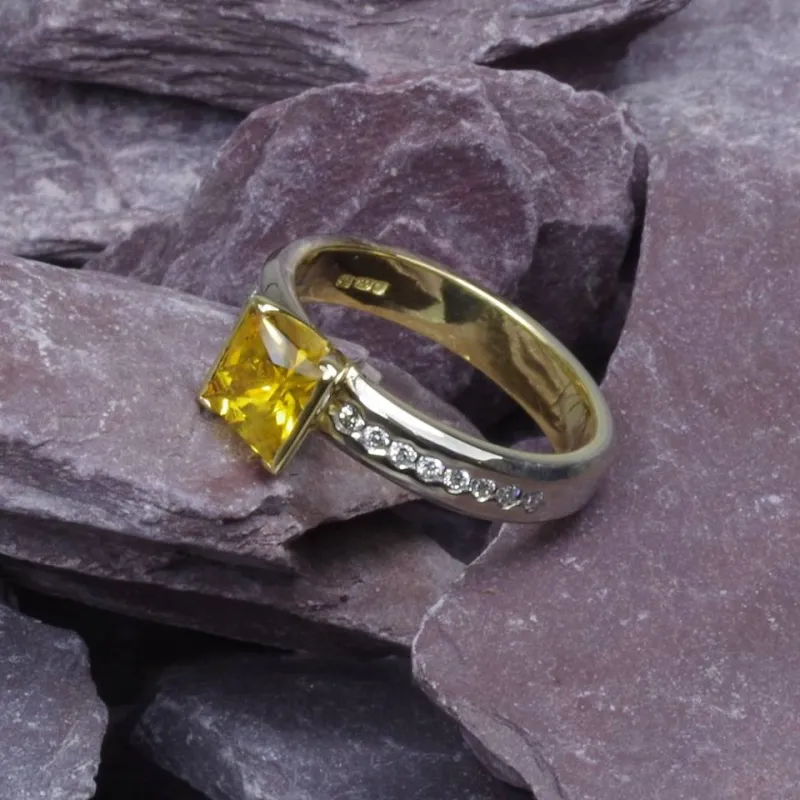
Photo: Lorraine Hughes, CC BY 2.0, via Wikimedia Commons
Diamonds Aren't Actually Rare — One Company Spent a Century Making Sure You Never Found Out
When someone gets engaged in America, a diamond ring isn't just customary — it feels almost biologically required. The stone signals permanence, value, commitment. It's been that way for so long that questioning it feels almost rude, like asking whether love is real.
But here's the thing: diamonds are not rare. They are not exceptionally precious by any geological standard. And the reason you believe otherwise is the result of one of the most deliberate, sustained, and frankly impressive acts of commercial manipulation in modern history.
What the Geology Actually Shows
Gemologists and earth scientists are fairly candid about this when they're not in a jewelry store: diamonds are among the more abundant gemstones found in the Earth's crust. They form under high pressure deep in the mantle and reach the surface through volcanic formations called kimberlite pipes. These pipes exist on multiple continents. Large deposits have been found in Russia, Botswana, Canada, Australia, and elsewhere.
For comparison, truly rare gemstones — alexandrite, red beryl, grandidierite, painite — are so scarce that most people have never heard of them and couldn't find them in a standard jewelry store if they tried. Diamonds are available at every mall in America.
The scarcity you feel when you look at diamond prices is not coming from the ground. It's coming from a boardroom.
The Company That Controlled the Story
De Beers, the South African mining conglomerate founded in 1888 by Cecil Rhodes, spent the better part of the 20th century doing something that has no real equivalent in commercial history: it systematically controlled the global supply of diamonds to keep prices artificially high.
 Photo: Cecil Rhodes, via upload.wikimedia.org
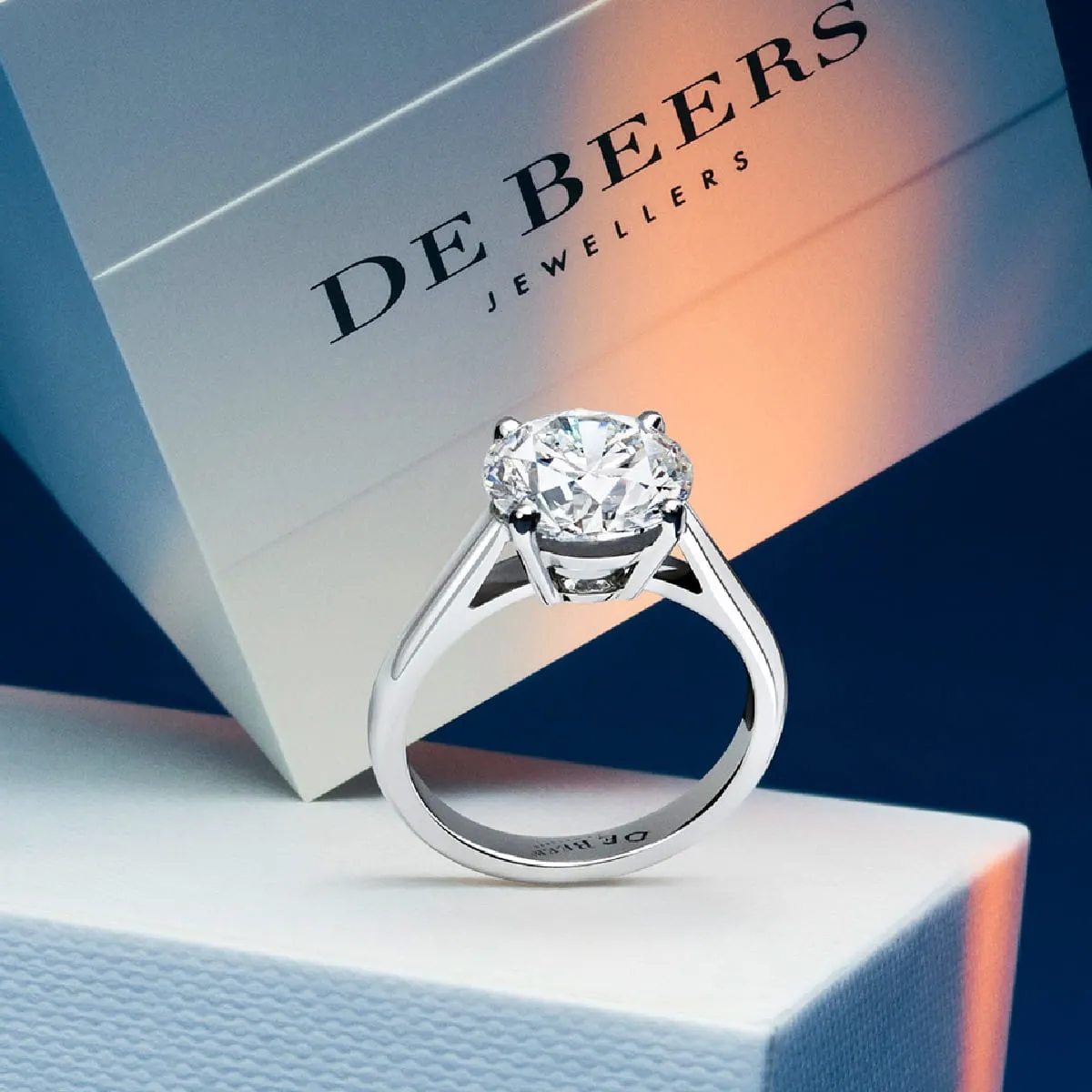 Photo: De Beers, via www.mayfair-london.co.uk
At its peak, De Beers controlled roughly 80 to 90 percent of the world's rough diamond supply. When new mines opened — in Russia, in Australia, in Canada — De Beers either acquired them, entered supply agreements with them, or bought their output wholesale to prevent it from reaching open markets. Diamonds that were mined but not needed to meet demand were simply stockpiled. Warehouses full of diamonds, kept off the market, so that the ones that did reach consumers felt scarce.
This wasn't a secret, exactly, but it also wasn't something the company advertised. The strategy worked because it was invisible to consumers. You don't think about stockpiles when you're standing at a jewelry counter. You think about the ring.
The Slogan That Was Engineered to Kill Resale
In 1947, De Beers hired the advertising agency N.W. Ayer to solve a specific problem. Diamond sales in the United States had been sluggish during the Depression and war years, and the company needed to rebuild demand. More urgently, it needed to prevent a secondary market from developing — because if people started reselling diamonds freely, the illusion of scarcity would collapse overnight.
The solution was a copywriter named Frances Gerety, who came up with four words that would become arguably the most effective advertising slogan of the 20th century: A Diamond Is Forever.
Adweek named it the slogan of the century in 1999, and it earned that designation — but not just because it was elegant. It was strategically brilliant in a way that went beyond brand awareness. The phrase was specifically designed to make the idea of reselling a diamond feel emotionally unacceptable. If a diamond is forever, you don't sell it. You don't trade it in. You don't pass it through a secondhand market that might establish what it's actually worth at arm's length.
The campaign worked. Engagement ring diamond sales in the U.S. exploded through the 1950s and 1960s. The idea that a man should spend two months' salary on a diamond ring — another De Beers invention, introduced in the 1980s — became so culturally embedded that it's still cited today as though it were a rule of etiquette rather than a marketing guideline written by an ad agency.
The Resale Market Tells the Real Story
If you want to understand what diamonds are actually worth, try selling one.
The resale market for diamonds is notoriously brutal. A diamond purchased at retail for $5,000 will typically fetch somewhere between $1,000 and $2,000 on the secondary market — a loss of 60 to 80 percent, sometimes more. This isn't like a used car losing value because it's been driven. It's a reflection of the fact that the retail price was never connected to genuine market supply and demand in the first place.
Gemologists who work outside the retail industry are fairly direct about this. The price of a diamond at a jewelry chain reflects De Beers' historical supply control, retail markup, and decades of cultural conditioning — not the stone's intrinsic rarity or scarcity value. The moment you try to sell back into a market that isn't propped up by those same factors, the number adjusts accordingly.
Lab-grown diamonds, which are chemically and physically identical to mined diamonds, have further exposed the disconnect. As lab-grown production has scaled up, prices for those stones have dropped dramatically — sometimes 80 percent below comparable mined stones — because there's no artificial supply restriction keeping prices elevated. The mined diamond industry has responded by lobbying for disclosure requirements and marketing campaigns emphasizing "natural" origins, but the price gap has made the underlying economics impossible to ignore.
Why the Myth Endures
The diamond myth persists for a few interconnected reasons. Emotional investment is a powerful insulator against information. If someone spent $10,000 on an engagement ring, learning that the stone isn't particularly rare and will lose most of its value the moment they walk out of the store is deeply unwelcome news. Beliefs that are tied to love, commitment, and identity are not easily dislodged by geology lessons.
The jewelry industry also benefits from consumers not asking too many questions, and it has historically been skilled at redirecting attention toward romance and meaning rather than economics.
But the story of diamonds is ultimately a story about how completely a market can be shaped by one company's deliberate decisions — and how advertising, when it's good enough, can make an economic arrangement feel like a natural truth.
The diamond on your finger isn't forever because of what it is. It's forever because someone in 1947 decided that was the most profitable sentence in the English language.