Eight Hours of Sleep Sounds Like Solid Medical Advice — But Sleep Scientists Have a More Complicated Answer
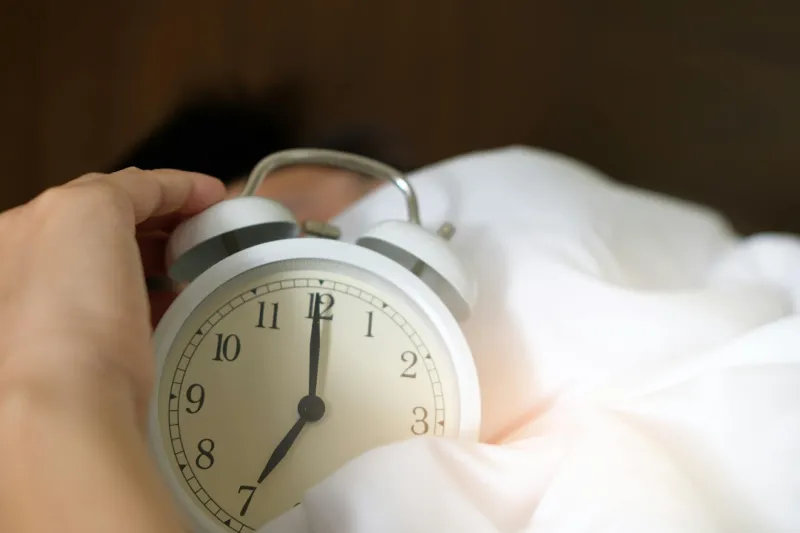
Eight Hours of Sleep Sounds Like Solid Medical Advice — But Sleep Scientists Have a More Complicated Answer
If there's one health rule that feels truly non-negotiable, it's this one: get eight hours of sleep. It's the kind of advice that comes from doctors, parents, wellness apps, and pretty much every magazine health column ever written. It carries the comfortable authority of obvious truth.
And yet, if you spend any time with actual sleep researchers, the eight-hour rule starts to look less like settled science and more like a useful shorthand that got mistaken for a universal law. The real story of how we sleep — and how much of it we need — is genuinely more interesting, and more personally relevant, than a single number suggests.
Where the Eight-Hour Rule Actually Came From
The eight-hour sleep standard doesn't have a single scientific origin. It emerged gradually, shaped less by sleep research and more by the rhythms of industrial labor.
Before the Industrial Revolution, human sleep patterns looked quite different. Historians and sleep researchers, including the late Virginia Tech scholar A. Roger Ekirch, have documented extensive evidence that pre-industrial Europeans commonly practiced what's called biphasic sleep — sleeping in two distinct segments of three to four hours each, with a period of quiet wakefulness in between. This first sleep and second sleep pattern appears in court records, diaries, literature, and medical texts going back centuries.
The shift to consolidated eight-hour sleep happened largely in the 19th century, when factory work and artificial lighting began restructuring daily life around rigid schedules. A single, unbroken block of nighttime sleep was more compatible with the demands of shift work and the factory whistle than a flexible two-phase pattern. The eight-hour figure also gained cultural traction through the labor movement — the famous "eight hours for work, eight hours for rest, eight hours for what we will" slogan from 19th century labor organizers helped cement the number in the public imagination as a reasonable and humane division of the day.
The point is that eight hours wasn't handed down from sleep science. It was shaped by economics and social history, and then medicine largely adopted it as a benchmark rather than discovering it from first principles.
What Sleep Research Actually Says About How Much You Need
Modern sleep science is clear on one thing: individual sleep needs vary significantly, and that variation is largely genetic.
Most adults function best on somewhere between seven and nine hours of sleep per night — a range that the American Academy of Sleep Medicine and the Sleep Research Society both endorse. But within that range, there's genuine biological diversity. Some people are natural short sleepers, carrying specific gene variants (notably in the DEC2 gene) that allow them to feel fully rested on six hours or fewer without any apparent cognitive deficit. These individuals aren't sleep-deprived workaholics. They're just built differently.
At the other end, some people genuinely need closer to nine or ten hours to function at their best, and chronically getting "only" eight hours leaves them running below capacity. Neither of these people is broken. They're just not the same person.
Age is another major variable. Teenagers have a well-documented biological shift in circadian rhythm that pushes their natural sleep window later into the night — which is why forcing a 16-year-old to be alert at 7 a.m. isn't just a discipline issue, it's a genuine mismatch between social schedules and adolescent biology. Newborns need 14 to 17 hours. Older adults often find their sleep architecture changes, with more fragmented nighttime sleep and a greater tendency toward daytime napping.
The Quality Question Nobody Talks About Enough
One of the biggest problems with focusing on a specific hour count is that it treats all sleep as equivalent, when it clearly isn't. Sleep architecture — the cycling through light sleep, deep sleep, and REM stages — matters enormously, and the same eight hours can leave you feeling restored or wrecked depending on how much time you actually spent in restorative deep sleep versus lying awake staring at the ceiling.
Sleep disorders like sleep apnea are a major and underdiagnosed reason why people can technically spend eight hours in bed and still feel exhausted. Approximately 30 million Americans have sleep apnea, and a significant portion of them don't know it. For those people, the advice to "just get eight hours" is essentially useless — the problem isn't duration, it's disrupted sleep architecture.
Stress, alcohol consumption, room temperature, light exposure, and screen use in the hour before bed all affect sleep quality in ways that don't show up in a simple hours-logged metric. Researchers increasingly argue that how you feel upon waking — and how you sustain energy and focus through the day — is a more meaningful indicator of adequate sleep than any fixed number.
Why the Simple Rule Persists
Public health messaging has a genuine tension built into it. Nuanced, individualized advice is almost impossible to communicate at scale. "Sleep needs vary by person, age, genetics, and sleep quality, so pay attention to how you feel and adjust accordingly" is accurate but hard to put on a poster. "Get eight hours" is clean, memorable, and actionable — even if it doesn't quite fit everyone.
There's also the fact that, for many Americans, the real problem isn't that the eight-hour rule is wrong — it's that they're not even close to hitting it. Chronic sleep deprivation is a genuine public health issue in the United States, with the CDC estimating that more than a third of American adults regularly get less than the recommended amount. In that context, promoting a clear minimum benchmark has real value, even if the precision is somewhat artificial.
But there's a cost to oversimplifying. People who genuinely need nine hours may feel like something is wrong with them for not thriving on eight. And people who feel fine on seven may be guilted into treating themselves as sleep-deprived when they aren't.
What to Actually Pay Attention To
Sleep researchers tend to recommend a more self-aware approach than clock-watching. A few useful questions: Do you wake up without an alarm feeling reasonably rested? Do you get through the afternoon without a significant energy crash? Can you sustain focus on tasks that require concentration? If the answers are yes, your sleep is probably working for you — regardless of whether it's exactly eight hours.
If the answers are no, the solution might not be simply adding more hours in bed. It could involve improving sleep quality, addressing an underlying disorder, or adjusting the timing of your sleep window to better match your natural chronotype.
The takeaway: Eight hours is a reasonable starting point for most adults, but it was never a universal prescription. The real goal is sleep that actually restores you — and that number is more personal than any guideline can capture.