That Left Brain vs Right Brain Test You Took? It's Based on Completely Misunderstood Science
The Personality Test That Fooled Everyone
If you've ever taken a quiz that told you whether you're a "left-brain logical person" or a "right-brain creative type," you've encountered one of psychology's most persistent myths. This idea has shaped everything from school curricula to corporate hiring practices, with millions of Americans confidently identifying as one brain type or the other.
The problem? Modern neuroscience shows this entire framework is backwards.
What the Original Research Actually Found
The left-brain/right-brain concept stems from legitimate research conducted in the 1960s by Nobel Prize winner Roger Sperry. He studied patients who had undergone split-brain surgery—a rare procedure where the connection between brain hemispheres is severed to treat severe epilepsy.
Sperry discovered that when these hemispheres couldn't communicate, they seemed to handle different tasks. The left hemisphere appeared more involved in language and analytical thinking, while the right showed more activity during spatial and visual tasks.
But here's the crucial detail that got lost: Sperry was studying brains that had been surgically altered. These patients represented a tiny fraction of humanity—people whose brains had been fundamentally changed by both severe epilepsy and major surgery.
How Medical Research Became Pop Psychology Gold
By the 1970s, Sperry's findings had been picked up by popular psychology writers who saw dollar signs in personality categorization. Books like "Drawing on the Right Side of the Brain" became bestsellers, promising to unlock hidden creative potential by accessing your "neglected" right hemisphere.
Corporate training programs jumped on the trend, offering workshops to help "left-brain" engineers become more creative or "right-brain" artists become more analytical. Personality tests proliferated, giving people neat categories to explain their strengths and limitations.
The appeal was obvious: complex human personality reduced to a simple, scientific-sounding binary choice.
What Brain Scans Actually Reveal
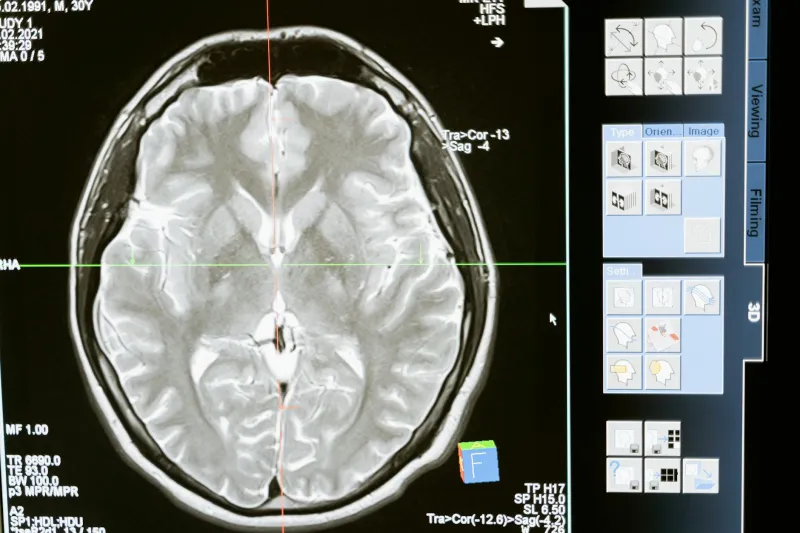
Modern brain imaging technology tells a completely different story. When neuroscientists use fMRI and PET scans to watch healthy brains in action, they see both hemispheres lighting up during virtually every task.
Solving a math problem? Both sides are active. Writing a poem? Same thing. Even activities we consider purely "left-brain" or "right-brain" involve extensive communication between hemispheres.
A 2013 University of Utah study analyzed brain scans from over 1,000 people and found no evidence that individuals preferentially use one hemisphere over another. The researchers concluded that the left-brain/right-brain theory "is not supported by our data."
Why the Myth Refuses to Die
Despite decades of contradictory evidence, the left-brain/right-brain concept persists for several psychological reasons:
It's appealingly simple. Human personality is messy and complex, but "I'm a right-brain person" provides a tidy explanation for why you're good at art but struggle with spreadsheets.
It feels scientific. The concept uses neuroscience terminology, making it seem more credible than other personality frameworks.
It excuses limitations. Believing you're "just not a math person" because you're right-brained can actually become a self-fulfilling prophecy, discouraging people from developing skills they assume they lack.
The Real Science of Learning and Skill Development
What does modern neuroscience actually tell us about how people learn and develop abilities?
First, your brain is remarkably plastic. Neural pathways strengthen with practice, regardless of which hemisphere they're located in. Someone who struggles with math isn't limited by their "brain type"—they simply need more practice and better instruction.
Second, most complex skills require integration between brain regions, not dominance by one hemisphere. Creativity, for instance, involves language areas (traditionally "left-brain"), spatial processing ("right-brain"), and emotional centers throughout the brain.
Third, individual differences in thinking styles do exist—they're just far more nuanced than a simple left/right division. Some people are naturally more detail-oriented while others see big pictures first. But these preferences aren't hardwired limitations.
What This Means for How You Approach Learning
Understanding the real neuroscience changes how you should think about developing new skills:
Stop using brain type as an excuse. "I'm not a numbers person" becomes a self-limiting belief that prevents you from improving quantitative skills through practice.
Embrace whole-brain learning. The most effective learning often combines analytical and creative approaches. Learning a language, for example, benefits from both systematic grammar study and creative conversation practice.
Focus on growth, not fixed traits. Instead of asking "What type of brain do I have?" ask "How can I develop the skills I need?"
The Bottom Line
The left-brain/right-brain personality framework feels scientific and provides comforting explanations for our strengths and weaknesses. But it's based on a fundamental misunderstanding of how healthy brains actually work.
Your brain doesn't operate like a corporation with separate departments. It's more like a jazz ensemble, with different regions improvising together to create complex thoughts, emotions, and behaviors.
Recognizing this doesn't diminish human individuality—it reveals something far more interesting. Rather than being limited by which half of your brain supposedly dominates, you have access to an integrated system capable of remarkable growth and adaptation throughout your life.
The next time someone asks whether you're left-brained or right-brained, you can confidently answer: "Actually, I'm whole-brained—and so are you."