Your Kitchen Sponge Probably Isn't Going to Kill You — The Cleaning Industry Just Needs You to Think It Might
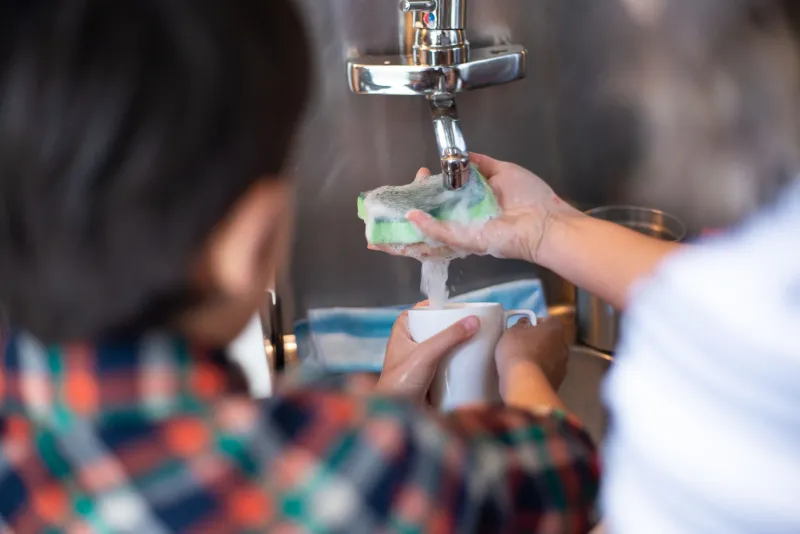
The Sponge Sitting on Your Sink
At some point, someone told you your kitchen sponge was disgusting. Maybe it was a TV commercial showing glowing green bacteria colonies multiplying on a yellow foam square. Maybe it was a headline about sponges harboring "more germs than a toilet seat." Maybe it was just a general cultural understanding that the sponge is the enemy.
Here's the thing: that framing was carefully constructed, and it was constructed to sell you something.
The kitchen sponge has become one of the most effective pieces of ambient marketing in American consumer history — not because of what it does, but because of what cleaning companies convinced you it might do. Understanding the real story requires separating the microbiology from the marketing, and the two are a lot further apart than most people realize.
Yes, Sponges Have Bacteria. That's Not the Whole Story.
Let's be fair: kitchen sponges do harbor bacteria. That part is true. Studies have found a wide variety of microbial life in used kitchen sponges, and a 2017 study published in the journal Scientific Reports identified over 360 different bacterial species in sponges collected from German households. That number has circulated widely — usually without much context.
Here's the context: the vast majority of bacteria that colonize everyday surfaces, including kitchen sponges, are completely harmless. The human body coexists with trillions of bacteria at any given moment. Your gut, your skin, and the surfaces of your home are all microbial ecosystems — and most of what lives in those environments poses no threat to a healthy adult.
The pathogens that cause actual foodborne illness — Salmonella, E. coli O157:H7, Listeria — can theoretically survive on a sponge, but they require a specific chain of events to cause harm: contamination from raw meat or produce, transfer to a ready-to-eat food surface, and consumption by someone vulnerable. That chain is real, but it's not the inevitable outcome of having a damp sponge near your kitchen sink.
Microbiologist Anne Neville of the University of Leeds put it plainly in an interview with the BBC: the risk from a typical kitchen sponge is real but routinely overstated. "People have been washing dishes for thousands of years," she noted, "and the apocalypse hasn't arrived."
How Cleaning Companies Built a Fear Economy
The antibacterial product boom in the United States didn't happen organically. It was a deliberate marketing pivot.
For most of the 20th century, dish soap was dish soap. It cleaned grease, it rinsed away food residue, and it was considered perfectly adequate for the job. Then, in the 1980s and 1990s, manufacturers began adding triclosan — an antimicrobial compound — to soaps, sponges, cutting boards, and kitchen surfaces, and marketing these products as a necessary upgrade for households concerned about health.
The messaging worked by reframing a routine cleaning task as a quasi-medical procedure. Suddenly, washing dishes wasn't about removing visible food — it was about eliminating invisible threats. Commercials showed concerned mothers and gleaming, germ-free kitchens. The implication was clear: if you weren't using antibacterial products, you were putting your family at risk.
In 2016, the FDA banned triclosan from consumer hand soaps after manufacturers failed to demonstrate that it was more effective than plain soap and water — and raised concerns about potential hormonal disruption with long-term exposure. The ruling was a significant moment, but by then the antibacterial mindset had already been thoroughly installed in American households.
What the Science Actually Recommends
So what does responsible kitchen hygiene actually look like, according to food safety researchers?
First, the sponge itself is less important than how it's used. Cross-contamination — wiping a surface that touched raw chicken and then wiping a cutting board used for vegetables — is the real mechanism behind kitchen-related illness. A clean sponge used carelessly is more dangerous than a bacteria-laden sponge used on surfaces that never touch ready-to-eat food.
Second, regular rinsing and drying genuinely reduces bacterial load. Bacteria thrive in moisture. A sponge that's rinsed thoroughly and allowed to dry between uses is a much less hospitable environment than one left wet and crumpled beside the faucet.
Third, if you want to sanitize a sponge, the methods that actually work are straightforward: microwaving a damp sponge for one to two minutes or running it through a dishwasher on the heated dry cycle has been shown to significantly reduce bacterial populations. You don't need specialized antibacterial sponge spray to accomplish this.
And finally, replacing your sponge every week or two — which costs almost nothing — is a perfectly reasonable way to manage any residual concern.
The Germaphobia That Sells
The deeper issue here is that the cleaning industry discovered something powerful: Americans, once convinced of an invisible threat, will pay a significant premium to feel protected from it. Antibacterial dish soaps, sanitizing sponge holders, disposable cleaning wipes, and kitchen surface sprays are all products that exist primarily because of a fear response — not because of a documented public health need.
That's not to say kitchen cleanliness doesn't matter. It does. Proper food handling, regular surface cleaning, and sensible hygiene practices are genuinely important, especially when cooking for young children, elderly family members, or anyone with a compromised immune system.
But for the average healthy American household, a regular sponge, used thoughtfully and replaced periodically, is not a lurking biohazard. It's a cleaning tool that has done its job reliably for generations — long before anyone thought to put "antibacterial" on the label.