Sunscreen Created the Skin Cancer Problem It Was Supposed to Solve
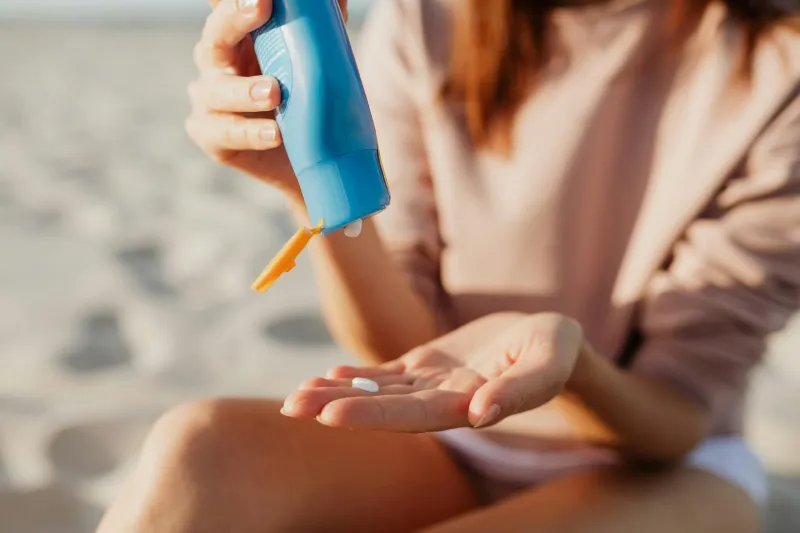
The Sunscreen Paradox Nobody Wants to Admit
Every summer, the same ritual plays out across American beaches: families slather on SPF 50, then spend the entire day baking in direct sunlight. They reapply religiously, follow every rule, and somehow still end up looking like lobsters by evening. Meanwhile, the person who forgot sunscreen entirely grabbed some shade after an hour and went home with barely any color.
This isn't just bad luck—it's a predictable outcome of how Americans learned to think about sun protection. And dermatologists are finally admitting they might have created the problem they were trying to solve.
How Protection Became Permission
The issue has a name in behavioral psychology: risk compensation. It's the tendency for people to take bigger risks when they feel safer. Think of how some drivers speed up when wearing seatbelts, or how rock climbers take more chances with better safety gear.
Sunscreen triggered the same response on a massive scale. Public health campaigns spent decades telling Americans that SPF was their ticket to safe sun exposure. The message people internalized? Sunscreen equals freedom to stay outside.
But here's what those campaigns didn't emphasize: sunscreen was never designed to extend your sun time. It was meant to protect you during unavoidable exposure—your walk to the car, lunch on the patio, the few minutes it takes to set up your beach umbrella.
Instead, SPF became marketed as a day pass to the sun. Higher numbers felt like longer permissions. SPF 30 meant you could stay out longer than SPF 15. SPF 50 felt practically bulletproof.
The Numbers That Don't Add Up
The math behind SPF ratings makes this confusion worse. SPF 30 blocks about 97% of UV rays, while SPF 50 blocks 98%. That tiny difference gets marketed as dramatically better protection, leading people to believe they can stay outside twice as long.
Meanwhile, real-world sunscreen performance falls far short of laboratory testing. Most people apply about half the amount used in SPF testing. They miss spots, sweat it off, and forget to reapply every two hours like the bottle suggests. That SPF 50 you're counting on? It's probably performing more like SPF 10.
But the bigger problem isn't application errors—it's duration. Studies tracking beach behavior found that people wearing sunscreen spend an average of 25% longer in direct sun than those without it. They take fewer shade breaks, stay out during peak UV hours, and generally treat sunscreen like a force field.
The result? Many sunscreen users end up with more total UV exposure than people who rely on hats, shirts, and strategic timing.
The Vitamin D Confusion That Made Everything Worse
Just as Americans were getting comfortable with the idea that sun equals danger, the vitamin D research exploded. Suddenly, avoiding the sun entirely seemed unhealthy too. People found themselves caught between conflicting messages: protect your skin, but don't become vitamin D deficient.
The supplement industry jumped on this confusion, but so did the sunscreen companies. Products started advertising that they'd let you get "safe" vitamin D while preventing burns. The message became even more muddled: you need some sun, but not too much, and sunscreen will help you find the sweet spot.
Except that's not how vitamin D synthesis works. Your skin produces vitamin D from UV exposure, but sunscreen blocks the same rays needed for that process. You can't have it both ways with a bottle of lotion.
What Dermatologists Actually Recommend (When Nobody's Marketing to You)
Talk to photodermatologists—the specialists who study sun damage professionally—and you'll hear advice that sounds nothing like sunscreen commercials.
Their hierarchy of sun protection puts sunscreen dead last. First: avoid peak UV hours (10 AM to 4 PM). Second: seek shade. Third: wear protective clothing and wide-brimmed hats. Fourth: use sunscreen on exposed areas that can't be covered.
Notice what's missing? The idea that sunscreen enables longer sun exposure. In clinical practice, dermatologists see this backfire constantly. Their patients with the most sun damage are often religious sunscreen users who spent decades thinking SPF gave them permission to be sun worshippers.
The professionals' approach is simpler: treat sun like any other environmental hazard. You wouldn't use safety goggles as an excuse to stare at welding torches all day. Similarly, sunscreen shouldn't be your ticket to eight hours of direct UV exposure.
The European Approach That Actually Works
European countries took a different approach to sun safety education, and their skin cancer rates tell the story. Instead of focusing primarily on sunscreen, public health campaigns emphasized sun avoidance during peak hours and protective clothing.
 Photo: European countries, via www.studyiq.com
In Australia—a country with intense UV exposure and high skin cancer rates—the "Slip, Slop, Slap" campaign put sunscreen third: slip on a shirt, slop on sunscreen, slap on a hat. The message was clear: sunscreen supplements other protection methods, it doesn't replace them.
Americans, meanwhile, got decades of messaging that essentially said: "Sunscreen first, everything else optional." The result is a population that thinks SPF 50 is a substitute for common sense.
The Real Story About Sun Protection
Here's what four decades of skin cancer research actually shows: the people with the healthiest sun habits use sunscreen sparingly and strategically. They're not slathering it on for day-long beach sessions. They're applying it to their nose during a morning run, or their shoulders while gardening.
The lowest skin cancer rates belong to people who treat sun exposure like alcohol—a little is fine, moderation is key, and more isn't better. They get their vitamin D from brief, unprotected exposure during off-peak hours, then cover up or head inside.
Sunscreen works exactly as advertised when used this way. The problem was never the product—it was the promise that came with it. SPF was supposed to be a safety net, not a sun pass. Understanding that difference might just save your skin.