The Bottled Water Industry Turned a Misread Government Memo Into a $300 Billion Health Mandate
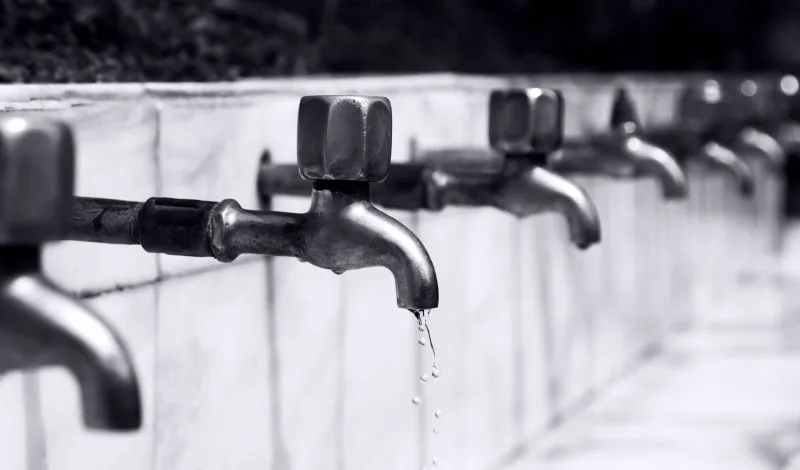
Ask almost any American how much water they should drink each day and you'll get the same answer: eight glasses. It comes out instantly, with total confidence, like reciting a phone number you've had for years. It's taught in schools, printed on wellness apps, and repeated by well-meaning relatives at every holiday dinner.
There's just one problem. That number was never actually a medical recommendation. And the industry that benefits most from you believing it spent decades making sure you never found out.
Where the Number Actually Came From
The origin of the eight-glasses rule traces back to a 1945 recommendation from the U.S. Food and Nutrition Board. The document suggested that adults consume roughly 2.5 liters of water per day — which, if you do the rough math, lands somewhere near eight 8-ounce glasses.
Here's what almost everyone missed: the very next sentence in that same document stated that most of this quantity is contained in prepared foods. In other words, the recommendation was about total water intake from all sources — soups, fruits, vegetables, coffee, everything — not eight standalone glasses of plain water on top of your normal diet.
That one sentence got quietly dropped somewhere between 1945 and the fitness boom of the 1980s. What remained was a number, stripped of its context, floating freely through American health culture like it had always been there.
Enter the Beverage Industry
Bottled water as a mass-market product barely existed in the United States before the 1990s. Americans drank tap water. They drank it from the sink, from drinking fountains, from garden hoses on hot summer days. Nobody was particularly worried about it.
Then Evian, Perrier, and eventually Dasani and Aquafina arrived — and with them came a quiet but well-funded campaign to reframe tap water as insufficient and hydration as something requiring constant, conscious effort.
Beverage companies began sponsoring "hydration research" at universities and funding sports science studies that, conveniently, kept arriving at conclusions supporting more frequent water consumption. They partnered with fitness influencers before that was even a word. They placed water bottles in the hands of celebrities and athletes. They turned carrying a water bottle into a personality trait — a visible signal that you were someone who took care of themselves.
The eight-glasses rule wasn't invented by the bottled water industry. But it was turbocharged by it. The industry needed a daily quota that made people feel like they were perpetually behind on their hydration, and an already-circulating myth handed them exactly that.
What Kidney Specialists and Sports Scientists Actually Say
Nephrologists — the doctors who specialize in kidney function and, by extension, know more about fluid balance than pretty much anyone — have been quietly frustrated by the eight-glasses myth for years.
Dr. Heinz Valtin, a kidney physiologist at Dartmouth Medical School, published a review in the American Journal of Physiology back in 2002 specifically examining whether the eight-glasses rule had any scientific foundation. His conclusion was blunt: there was no evidence supporting it for healthy adults living in temperate climates.
 Photo: Dr. Heinz Valtin, via geiselmed.dartmouth.edu
 Photo: Dartmouth Medical School, via 1.bp.blogspot.com
What he and other researchers consistently point to instead is something far simpler: thirst. Your body has an extraordinarily well-calibrated system for signaling when it needs water. That system is called thirst, and it evolved over millions of years specifically to keep you hydrated. For healthy adults who aren't running marathons in the Arizona desert, thirst is a reliable and accurate guide.
Sports scientists echo this. Research on endurance athletes has actually found that overhydration — drinking beyond thirst — carries its own risks, including a dangerous condition called hyponatremia, where excess water dilutes sodium levels in the blood. The idea that more water is always better is not just unsupported; in certain contexts, it's actively dangerous.
Your kidneys, operating normally, can process somewhere between 0.8 and 1 liter of water per hour. They are not waiting for you to hit a daily quota. They are continuously adjusting, filtering, and balancing — doing exactly what they were designed to do, provided you drink when you're thirsty and eat a reasonably varied diet.
Why the Myth Stuck
Part of the reason eight glasses persists is that it feels like wisdom. It's specific. It's actionable. It gives people something to track. In a culture that loves quantifying health — step counts, calorie counts, sleep scores — a daily water target slots in perfectly.
Health and wellness content also tends to reward simple, repeatable advice. "Drink when you're thirsty" doesn't generate app engagement or sell smart water bottles with hydration reminders. "You need eight glasses a day and here's a tracker" does.
And the bottled water industry, now a global market worth over $300 billion annually, has every financial reason to keep the myth alive. The more Americans believe they're chronically underhydrated, the more product moves off shelves.
The Real Takeaway
None of this means water isn't important. It obviously is. Severe dehydration is serious, and people in certain situations — intense physical activity, hot climates, illness — genuinely need to be more intentional about fluid intake.
But for the average healthy American going about a normal day? Your body already knows when it needs water. The signal it sends you is called thirst. You don't need an app, a quota, or a $6 bottle of glacier water to stay hydrated.
The real story here isn't that hydration doesn't matter. It's that a misread memo from 1945, amplified by an industry with billions at stake, convinced an entire country to distrust one of their most basic biological instincts — and pay handsomely for the replacement.