The '10% of Your Potential' Line Every Coach Uses Came From a Misquoted Essay — Not a Lab

The '10% of Your Potential' Line Every Coach Uses Came From a Misquoted Essay — Not a Lab
If you've ever sat through a corporate training seminar, listened to a self-help podcast, or watched a motivational speaker pace a stage, you've probably heard some version of this idea: most people only use a fraction of their true potential. It sounds profound. It feels motivating. And it has been repeated so many times by so many credible-sounding people that most of us have absorbed it as common sense.
There's just one problem. No researcher has ever measured human potential and found it lacking. No psychologist has defined a unit of potential and discovered that most people hit only 10 percent of it. The claim isn't rooted in science at all — it's rooted in a long chain of misquotations, philosophical speculation, and an industry that profits enormously from making you feel like you're leaving something on the table.
Where the Phrase Actually Came From
The most traceable origin of this idea runs through the American philosopher and psychologist William James, who in 1907 wrote an essay arguing that most people live far below their mental and physical capacities. James wasn't publishing a scientific finding — he was making a philosophical observation about human habit and complacency. He never attached a number to it. He never claimed to have measured anything.
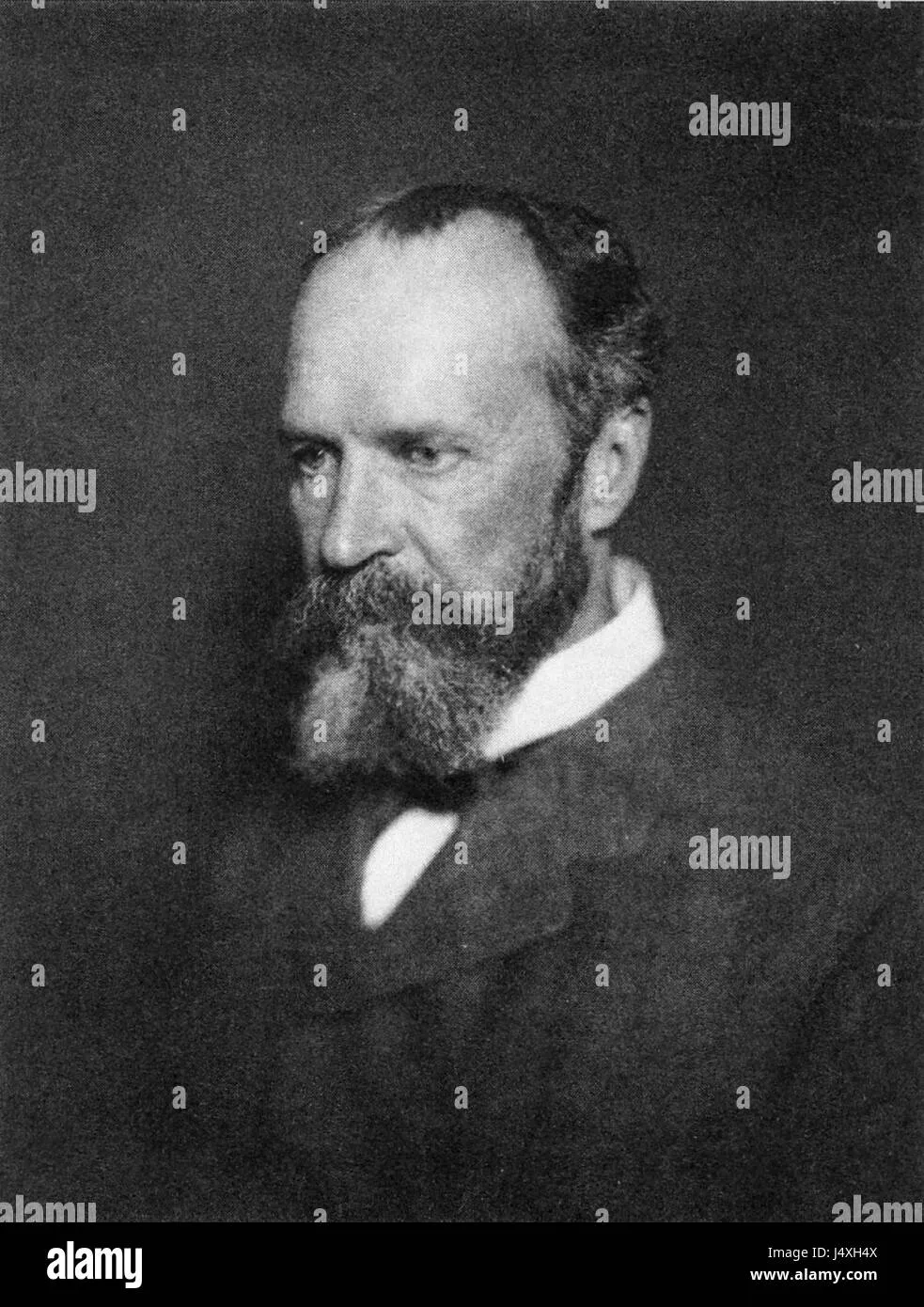 Photo: William James, via c8.alamy.com
Somewhere in the decades that followed, his vague but compelling idea picked up a specific figure. By the mid-20th century, popular writers and motivational speakers were citing "10 percent" as if it were a measured quantity, often attributing it to James or to Einstein — even though Einstein never said it, and James never calculated it. The number gave the idea a scientific veneer it never earned.
 Photo: Albert Einstein, via i.etsystatic.com
The myth got a second wind from early 20th-century pseudoscience, particularly from writers and educators who were fascinated by the emerging fields of psychology and neurology. During the 1920s and 1930s, as brain science was still in its infancy, it was genuinely fashionable to speculate that humans possessed vast untapped reserves of mental power. This speculation was exciting and culturally resonant. It was also almost entirely without evidence.
The Self-Help Industry Found a Gold Mine
Here's what makes this myth so durable: it's a perfect sales pitch. If you already believe you're performing at your limit, you have no reason to buy a course, hire a coach, or attend a weekend seminar. But if you believe you're secretly capable of two, five, or ten times more — and that someone has the system to unlock it — suddenly there's a product for that.
The self-improvement industry in the United States generates over $13 billion annually, and the "untapped potential" narrative is one of its most reliable engines. Coaches, speakers, and training programs don't need to prove the claim. They just need to repeat it confidently enough that it feels true, and then offer a solution to the problem they've just invented.
The phrase also has a particular stickiness because it's impossible to falsify in personal experience. If things go well after you take a course or work with a coach, the potential narrative gets confirmed. If things don't go well, the explanation is ready-made: you haven't fully committed yet. The myth is structured to survive any outcome.
What Psychology Actually Says About Human Performance
Real psychology and neuroscience don't support the idea of a hidden reservoir of potential waiting to be unlocked by the right mindset program. What researchers have found is that human performance is shaped by specific, learnable skills — deliberate practice, sleep quality, stress management, social connection, and clear goal-setting among them.
Anders Ericsson, the psychologist whose work on expertise became the basis for the "10,000-hour rule" popularized by Malcolm Gladwell, spent decades studying what separates elite performers from average ones. His conclusion wasn't that elite performers had unlocked some hidden potential. It was that they had practiced specific skills in specific ways over long periods of time. Improvement is real, but it's granular and effortful — not a switch waiting to be flipped.
 Photo: Anders Ericsson, via therealeducation.com
There's also the question of what "potential" even means as a measurable quantity. Cognitive scientists have no agreed-upon definition of it, no instrument for measuring it, and no baseline against which to compare it. The idea that humans use only 10 percent of their potential isn't just unproven — it's not even a coherent scientific claim. You can't measure a percentage of something that has no defined unit.
Why the Myth Keeps Spreading
The persistence of this idea comes down to the fact that it feels true in a way that's emotionally satisfying. Most people have experienced moments of performing better than expected — finishing a project under pressure, discovering a skill they didn't know they had, pushing through physical exhaustion and finding more energy on the other side. Those experiences feel like evidence of untapped reserves.
But what those moments actually reflect is context-dependent performance variation, not a hidden ceiling being briefly touched. Humans perform differently under different conditions. That's not the same as having a vast unused capacity sitting dormant, waiting for the right seminar.
The coaching and wellness industries have been very good at taking this normal variation in human performance and reframing it as proof of unlimited potential — and then selling you a way to access it.
The Real Takeaway
None of this means self-improvement is a scam or that people can't grow. People absolutely can develop new skills, build better habits, and perform at higher levels with the right support and effort. That's well-documented.
What isn't documented — anywhere, by anyone — is the specific claim that humans are walking around using only a fraction of some measurable potential, and that a coaching program can fix it. That idea was never scientific. It was philosophical speculation that got laundered into a sales pitch over the course of a century.
The next time a speaker or a coach opens with some version of "you're only using ten percent of what you're capable of," it's worth asking: how exactly did they measure that? The honest answer is that nobody ever did.