That 'Fresh' Salmon at the Grocery Counter Has a Much Longer Story Than You're Being Told
That 'Fresh' Salmon at the Grocery Counter Has a Much Longer Story Than You're Being Told
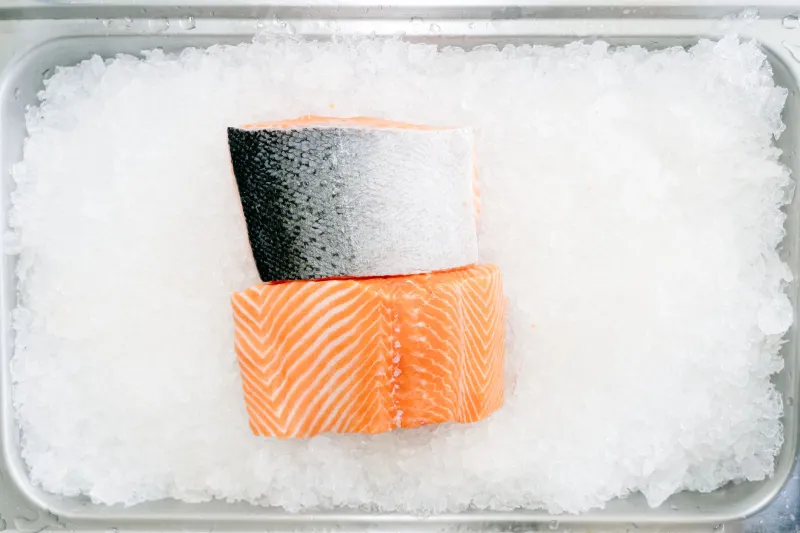
There's something about a seafood counter that feels inherently trustworthy. The ice, the careful presentation, the staff in aprons who can tell you the fish came in "this morning" — it all adds up to an impression of freshness that's almost theatrical in how effectively it works. Most shoppers walk away feeling good about paying $18 a pound instead of reaching for the frozen bag a few feet away.
But here's what the display doesn't tell you: the salmon you just bought may have been caught months ago, flash-frozen at sea within hours of being pulled from the water, shipped across an ocean in a cargo container, thawed at a processing facility, and then placed on ice at your local store — where it's now being sold as "fresh."
That's not a scandal, exactly. But it is a story most Americans have never heard, and it has real implications for how you shop, what you pay, and what you actually take home.
How Supermarket Salmon Actually Gets to You
The overwhelming majority of salmon sold in American grocery stores comes from either Atlantic farmed operations — primarily in Norway, Chile, and Canada — or wild-caught Pacific fisheries in Alaska. In either case, we're talking about fish that originates far from most American cities and travels through a supply chain that takes days, weeks, or in some cases considerably longer.
For wild Alaskan salmon, the most common approach is freezing the fish at sea immediately after catch. This is actually good practice from a food safety and quality standpoint — fish frozen within hours of being caught is genuinely fresher in terms of cellular integrity than fish that's been sitting on ice during a multi-day journey. The industry calls this IQF (individually quick frozen), and it's the standard for most commercial fishing operations.
The fish then travels to processing facilities — often in Asia, where labor costs make large-scale filleting economically viable — before being shipped to distributors in the U.S. By the time it arrives at a regional grocery warehouse, it may have been frozen for anywhere from a few weeks to several months, depending on where in the seasonal cycle it was caught and how inventory is managed.
At that point, a portion of that fish gets thawed and placed on the fresh counter. Another portion stays frozen and gets stocked in the freezer aisle.
Same fish. Different journey to your cart. Very different price tag.
The Labeling Loophole That Makes This Possible
So how can stores call it "fresh" if it was frozen? The answer lies in how the FDA defines the term — or more accurately, how loosely that definition is applied in practice.
The FDA does have guidelines distinguishing "fresh" from "previously frozen" seafood, and technically, fish that has been frozen should be labeled as such. But enforcement is inconsistent, and the retail environment creates plenty of gray area. A store that thaws fish and places it on ice is not always required to prominently display "previously frozen" signage, and many don't. The disclosure, when it exists at all, is often printed in small type on a back label or mentioned only if a customer specifically asks.
A 2019 report from the advocacy group Oceana, which has conducted multiple large-scale seafood fraud investigations across the U.S., found widespread mislabeling across grocery chains and restaurants — not just in terms of "fresh" versus frozen, but in species identification as well. Fish sold as one species was frequently a cheaper substitute. The seafood supply chain has enough links, and enough jurisdictions involved, that traceability is genuinely difficult.
Does 'Previously Frozen' Actually Mean Lower Quality?
Here's where the real story gets interesting — and where the industry's framing actually works against consumers rather than for them.
Fresh fish that hasn't been frozen is genuinely superior in texture and flavor when it's truly fresh — meaning caught within the last day or two and handled carefully throughout. But that kind of fish is rare at most inland supermarkets and comes at a serious premium even when it's available.
Fish that was properly frozen at sea immediately after catch and thawed carefully is often better than fish that's been traveling unfrozen for several days. The freezing process, done right, locks in quality at peak freshness. The slow deterioration that happens during extended refrigerated transport doesn't.
What this means practically: the frozen salmon in the bag next to the fresh counter may actually be fresher — in any meaningful sense of the word — than the thawed fillets presented on ice. And it almost certainly costs less.
Chefs and food scientists have known this for years. The bias against frozen fish is largely a consumer perception issue, not a quality one — and it's a perception the industry has very little financial incentive to correct.
Where to Actually Find Fresh Fish
None of this means fresh, never-frozen fish doesn't exist or isn't worth seeking out. It does and it is — you just have to know where to look.
Fishmongers with direct relationships with local fishing operations, coastal fish markets, and community-supported fishery (CSF) programs — the seafood equivalent of a farm share — are your best bets for fish that genuinely arrived recently. Asking specific questions helps: When did this come in? Was it ever frozen? Where was it caught? A good fishmonger will answer those questions directly. Vague or evasive answers tell you something too.
For inland shoppers without easy access to those options, high-quality IQF frozen fish — particularly wild Alaskan salmon — is a genuinely excellent choice and often represents better value than the thawed fillets at the counter.
The Takeaway
The word "fresh" at a grocery store seafood counter is doing a lot of marketing work and not a lot of descriptive work. Understanding the actual supply chain behind that gleaming display doesn't mean you need to stop buying salmon — it means you can make a smarter, more informed choice about which salmon to buy and where to spend your money. The fish in the freezer aisle isn't a consolation prize. Sometimes it's the better option.