The Reason Americans Overcook Perfectly Good Meat Comes Down to One Outdated Government Scare
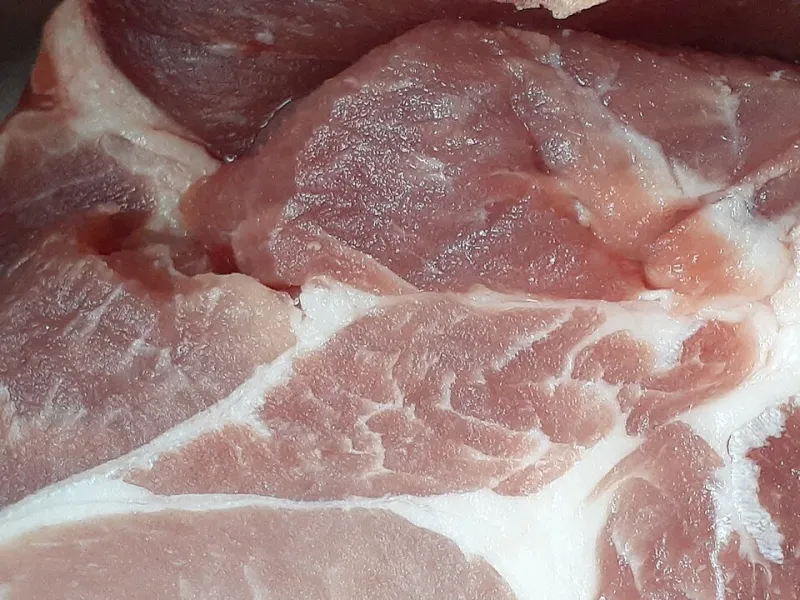
Photo: Presixlla MOON, CC BY-SA 4.0, via Wikimedia Commons
Ask someone who grew up in an American kitchen what the rule is for cooking pork, and there's a good chance they'll tell you it has to be cooked all the way through — no pink, no exceptions. For decades, this felt like settled wisdom. Pork chops came out dry. Pork loin got sliced into something resembling sawdust. And everyone just accepted that this was the price of eating safely.
Then in 2011, the USDA revised its recommended internal temperature for whole cuts of pork from 160°F down to 145°F, with a three-minute rest time. Food writers noticed. Chefs celebrated. And a lot of home cooks looked at each other and said: wait, how long has that been wrong?
The answer involves a parasite, a public health campaign, and the particular difficulty government agencies have walking back advice they've spent decades promoting.
The Trichinosis Problem That Wasn't
The original logic behind cooking pork to 160°F wasn't arbitrary. It was a response to trichinosis, a parasitic infection caused by Trichinella spiralis, a roundworm that can live in undercooked pork muscle tissue. In the early and mid-20th century, trichinosis was a legitimate public health concern in the United States. Cases were reported regularly, and the infection could cause serious illness.
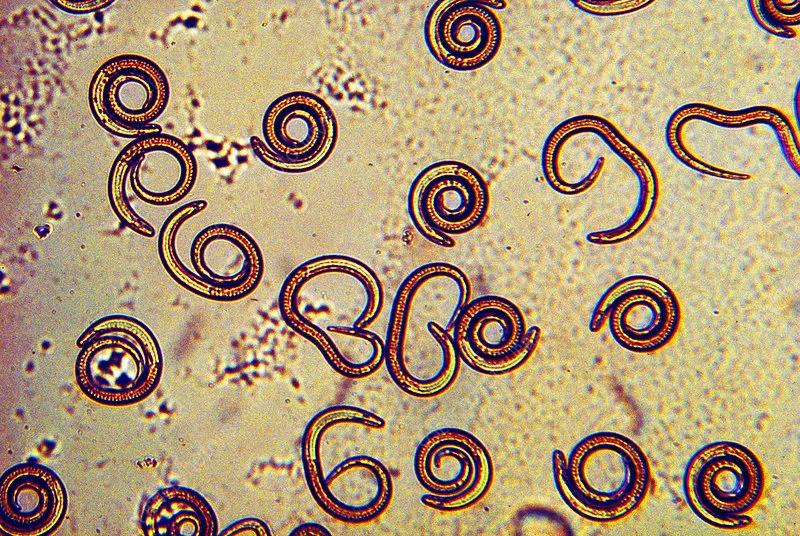 Photo: Trichinella spiralis, via media.sciencephoto.com
The USDA's guidance to cook pork thoroughly was a reasonable response to a real problem — at the time it was issued.
What changed is that the US pork supply changed dramatically. Modern commercial hog farming practices, refrigeration standards, and feed regulations effectively eliminated Trichinella from commercially raised pigs in America. By the time most of today's adults were learning to cook, the risk that justified the 160°F rule had already been reduced to near zero. The CDC was reporting fewer than 20 cases of trichinosis per year in the US by the 2000s, and the majority of those cases were linked to wild game — not grocery store pork.
The science had moved on. The cooking advice hadn't.
Why Government Food Guidance Is Slow to Change
This isn't unique to pork. Government food safety agencies operate under a specific institutional logic that makes revising public guidance genuinely difficult, even when the underlying evidence has shifted.
The asymmetry of risk plays a big role. If the USDA updates a temperature guideline and someone gets sick, that's a visible, attributable failure. If the USDA keeps an outdated guideline in place and millions of people overcook their pork for another decade, that's invisible — no one files a complaint about a dry pork chop. The incentive structure pushes toward caution, even when the caution is no longer scientifically necessary.
There's also the problem of public communication. Reversing well-established guidance requires explaining why the old guidance existed, why it's being changed, and why that change doesn't mean the agency was reckless before. That's a nuanced message to deliver, and nuance doesn't always survive the journey from press release to kitchen table.
The 2011 revision got relatively modest media coverage. It didn't penetrate deeply into home cooking culture. Plenty of cookbooks printed before 2011 are still on kitchen shelves, still recommending 160°F.
The Spillover Effect on Other Proteins
The overcooking habit didn't stay confined to pork. Food researchers and culinary educators have noted that American home cooks have historically applied a similar overcaution to beef, particularly ground beef and steaks, often out of a generalized anxiety about undercooked meat rather than any specific safety concern.
The actual USDA guidance on beef steaks allows for significantly lower internal temperatures than many home cooks realize. A steak cooked to 145°F with a rest period is considered safe by federal standards — and most of what's happening at a well-done temperature well above that is purely a texture and flavor decision, not a safety one.
Food safety scientists draw a consistent distinction between whole muscle cuts and ground meat. With a steak or a pork chop, potential surface bacteria are killed during cooking and don't penetrate the interior. Ground meat is a different calculation because the grinding process distributes surface bacteria throughout. The rules are different, but the anxiety tends to get applied uniformly.
What Food Scientists Actually Recommend
Modern food safety research focuses on a combination of temperature, time, and resting — not on a single threshold that has to be hit no matter what. A pork loin brought to 145°F and rested for three minutes reaches a level of safety that 160°F was designed to guarantee through brute heat alone.
Chefs and food scientists also point to the role of visual cues in home cooking confusion. Pink pork became synonymous with dangerous pork in American kitchens — a visual shorthand that made sense when the 160°F rule was the standard, but doesn't map onto the updated guidance. Pork cooked to a safe 145°F can still show a slight blush of pink, which triggers alarm in cooks who were taught to treat any pink as a warning sign.
Unlearning that association is harder than updating a number on a chart.
The Takeaway
The dry, overcooked pork chop isn't a food safety requirement — it's a cultural artifact of a public health campaign from a different era. The parasite it was designed to guard against had largely disappeared from the commercial US pork supply long before the guidelines were updated. If you've been cooking pork to 160°F out of habit, the USDA itself has been telling you for over a decade that you can stop. A little pink, a proper thermometer, and a three-minute rest is all you actually need.