The Two-Hour Leftover Rule Feels Like Food Science — But It Was Mostly Built by Lawyers and Lobbyists
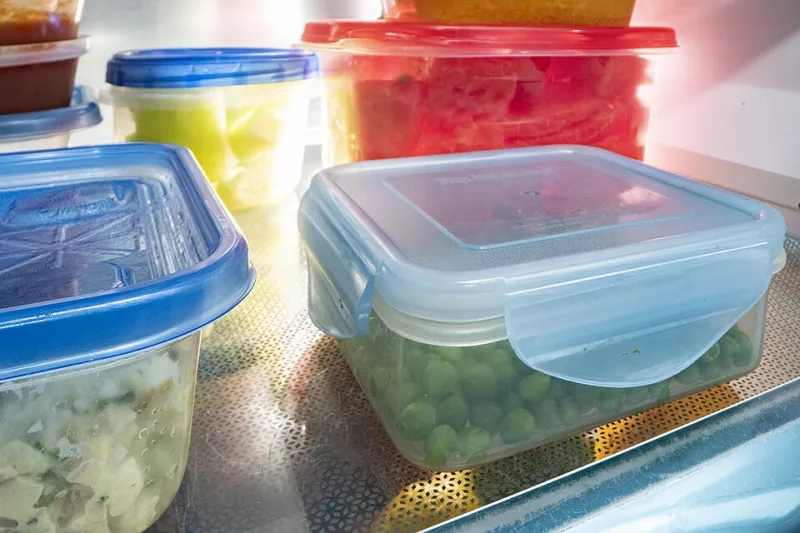
Photo: USDAgov, Public domain, via Wikimedia Commons
If you grew up in an American kitchen, you know the rule: food left out for more than two hours goes straight in the trash. It's the kind of guidance that gets passed down with absolute conviction — from parents to kids, from food handlers in restaurants, from every government food safety pamphlet ever printed. Two hours. Not two and a half. Not three. Two.
The rule sounds precise because precision sounds scientific. And in a country where foodborne illness sends roughly 128,000 people to the hospital every year, nobody wants to mess around.
But when you actually trace where the two-hour clock came from, the story gets a lot more complicated — and a lot more interesting — than the hard deadline suggests.
The 'Danger Zone' Is Real. The Deadline Is More Complicated.
Let's start with what the science does support. Food safety microbiologists are clear that temperature matters enormously when it comes to bacterial growth. The range between 40°F and 140°F is legitimately called the "danger zone" because bacteria like Salmonella, Staph aureus, and E. coli multiply rapidly in that range — roughly doubling every 20 minutes under ideal conditions.
So the underlying concern is real. Leaving cooked chicken on the counter in a warm kitchen does create conditions where bacterial growth accelerates. Nobody is disputing that.
What's more contested is the idea that two hours is a precise, universal threshold at which food transitions from safe to dangerous. That framing is where the science gets fuzzy and the policy decisions get interesting.
Who Actually Set the Clock?
The two-hour rule as Americans know it was largely standardized through USDA and FDA guidance, but the development of that guidance involved significant input from food industry stakeholders — manufacturers, restaurant groups, and trade associations — whose primary concern wasn't just public health but also legal liability.
Food companies needed a defensible standard. A clear, simple rule that, if followed, would protect them from lawsuits in the event of a foodborne illness outbreak. "We followed the two-hour guideline" is a cleaner legal defense than "we used contextual judgment about temperature and food type." The rule's rigidity is, in part, a feature designed for liability management rather than nuanced food safety communication.
Food safety researchers and microbiologists generally agree that the actual risk depends on far more variables than a single time limit captures: the ambient temperature of the room, the type of food, how it was cooked, how it was stored, and whether it was covered. A pot of beef stew sitting in a 68°F kitchen is a very different situation from a platter of raw shellfish at an outdoor summer cookout.
The USDA's own guidance acknowledges this to a degree — it shortens the window to one hour when ambient temperatures exceed 90°F. Which is a quiet admission that the rule is temperature-dependent, not time-absolute.
How Other Countries Handle the Same Problem
One of the most revealing ways to interrogate the two-hour rule is to look at how other developed nations approach the same question — and notice that they don't all arrive at the same answer.
In the United Kingdom, France, and much of Western Europe, food safety guidelines are generally less rigid about specific time windows and more focused on temperature control and food type. Many European households routinely leave certain cooked foods at room temperature for periods that would cause genuine alarm in an American kitchen, yet food poisoning rates in those countries aren't meaningfully higher than in the U.S.
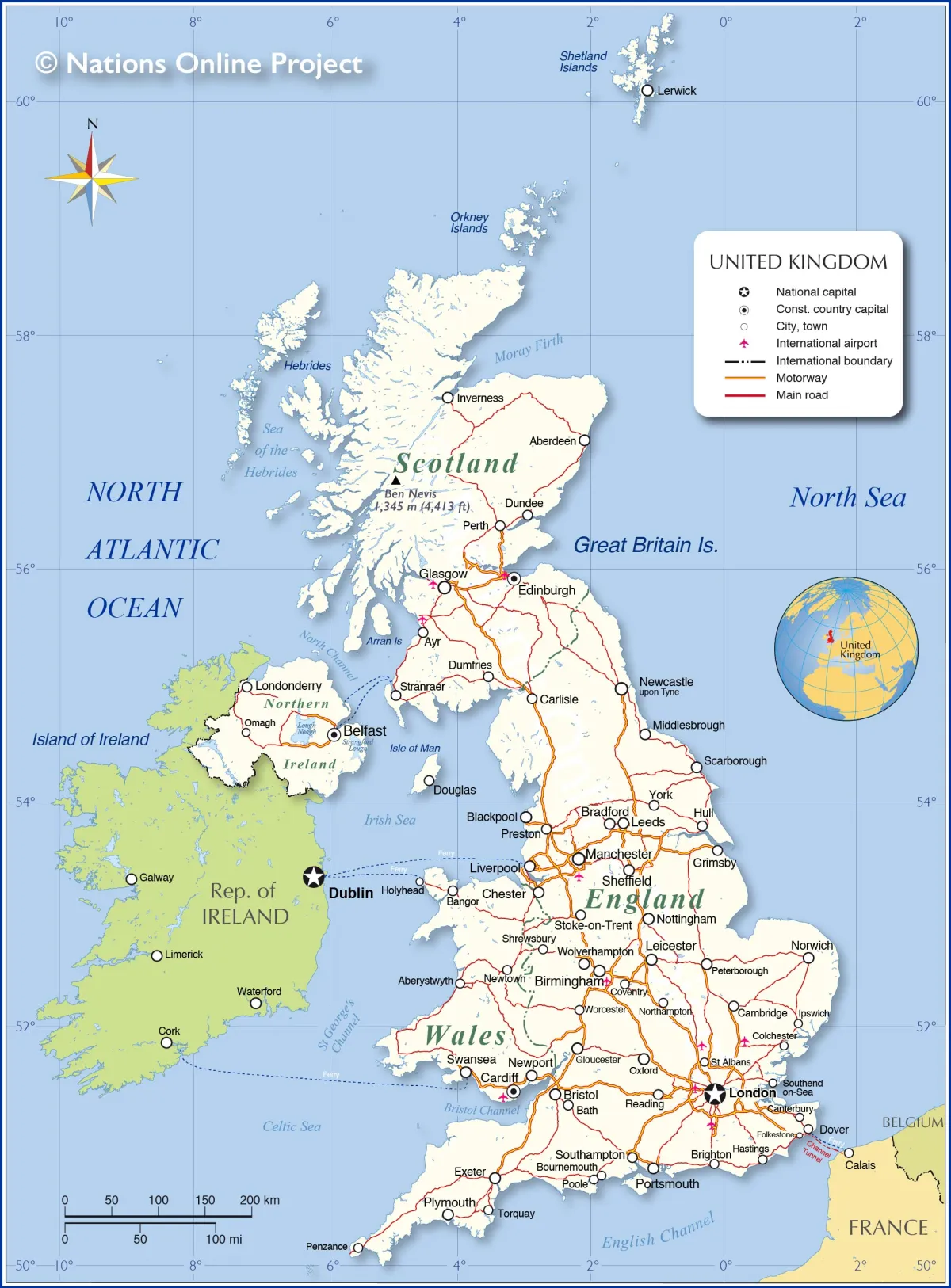 Photo: United Kingdom, via www.nationsonline.org
Japan, a country with extraordinarily high standards for food safety and freshness, has its own set of norms around food handling that differ significantly from American guidelines — and a food culture that involves dishes sitting at room temperature in ways that would make the USDA nervous.
This doesn't mean food safety rules are arbitrary. It means the specific two-hour clock is a policy choice, not a law of biology. Different risk tolerances, different legal frameworks, and different food cultures produce different rules — all of them functioning adequately.
The Rule Is Also Not One Rule
Another thing worth understanding: food safety researchers don't actually treat all leftovers the same way, even if public messaging flattens everything into one simple guideline.
High-protein foods like cooked meat, poultry, and fish are genuinely higher risk for bacterial growth than, say, a bowl of roasted vegetables or a loaf of bread. Acidic foods — think tomato-based dishes or foods with vinegar — are more hostile environments for bacterial growth than neutral or alkaline ones. Foods with high water activity (loosely, foods with a lot of moisture available for bacteria to use) are riskier than drier foods.
The two-hour rule doesn't distinguish between any of these. It applies the same deadline to a rare steak and a bag of pretzels, which is a sign that it's designed for simplicity and legal defensibility rather than precision.
What You Should Actually Do With This Information
None of this is an argument for leaving chicken salad on your counter overnight. Foodborne illness is genuinely unpleasant and occasionally dangerous, and the underlying principle — don't let perishable food sit in warm conditions for extended periods — is sound.
But understanding that the two-hour rule is a standardized guideline with legal and commercial origins, rather than a precise biological threshold, is useful context. It means that forgetting to refrigerate a covered pot of vegetable soup for two and a half hours on a cool evening isn't necessarily a food safety emergency — even if every government pamphlet in your kitchen drawer says otherwise.
The real story is that food safety is genuinely complex, and the clean, simple rules we follow were built to manage that complexity — not always to reflect it accurately.