Putting Bread in the Fridge Makes It Go Stale Faster — Food Scientists Have Known This for Decades
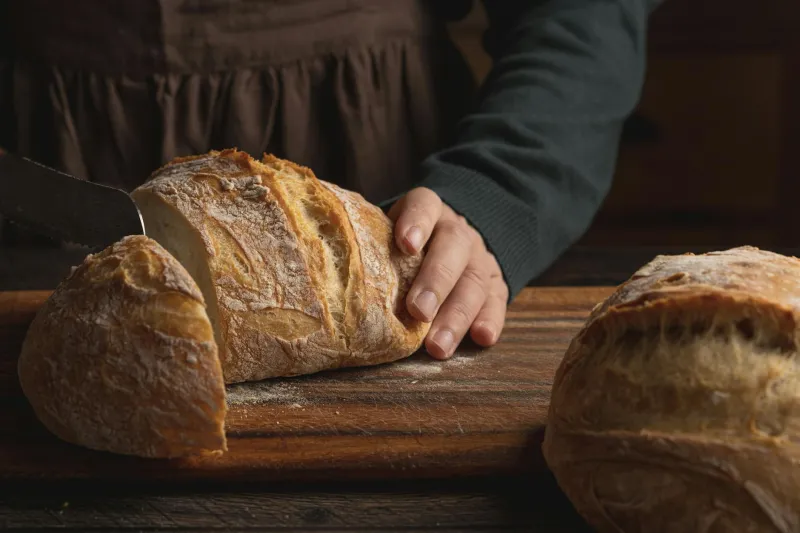
The Kitchen Habit That Backfires
Open most American refrigerators and you'll find it: a loaf of bread, carefully stored to "keep it fresh longer." This seems logical — refrigeration preserves milk, vegetables, and leftovers, so why not bread? But food scientists have known for decades that refrigerating bread actually makes it go stale faster than leaving it on the counter.
Millions of American households are unknowingly sabotaging their bread with this well-intentioned storage method, creating dry, flavorless loaves while thinking they're being smart about food preservation.
The Science Behind Stale Bread
Staleness isn't about mold or spoilage — it's about chemistry. When bread goes stale, you're witnessing a process called starch retrogradation, where the starch molecules that give fresh bread its soft, springy texture reorganize into a harder, more crystalline structure.
This process happens naturally over time, but temperature dramatically affects the speed. The sweet spot for starch retrogradation occurs between 36-40°F — exactly the temperature range of most home refrigerators.
"Refrigerator temperatures are like a fast-forward button for bread staling," explains Dr. Maria Santos, a food scientist at Cornell University. "The starch molecules reorganize about six times faster at refrigerator temperature than they do at room temperature."
 Photo: Cornell University, via images.squarespace-cdn.com
Why Americans Started Refrigerating Bread
The bread-in-the-fridge habit likely emerged from a combination of factors that made sense individually but created problems together.
Post-World War II America saw the rise of pre-sliced, packaged bread with longer shelf lives but also more preservatives. Marketing emphasized "freshness" and "keeping things cold." Meanwhile, larger suburban homes meant people shopped less frequently and wanted food to last longer.
Refrigeration seemed like a natural solution. After all, it works for almost everything else. The problem is that bread isn't like other foods — its aging process is chemical, not bacterial.
What Actually Causes Bread to Go Bad
Fresh bread faces two main threats: staleness and mold. These are completely different problems that require different solutions.
Staleness is that chemical process we discussed — starch molecules reorganizing regardless of bacteria or mold. This happens faster in cold temperatures and can't be stopped, only slowed.
Mold, on the other hand, is biological. Mold spores need moisture and moderate temperatures to grow. Ironically, the dry environment of most refrigerators actually helps prevent mold, but at the cost of dramatically accelerating staleness.
The Counter vs. Fridge Experiment
Food scientists have repeatedly tested this phenomenon. In controlled studies, bread stored at room temperature (68-72°F) maintains its soft texture and flavor significantly longer than bread stored at refrigerator temperature.
A typical timeline looks like this:
- Counter storage: Bread stays fresh for 3-4 days, then gradually stales
- Refrigerator storage: Bread begins staling within 24 hours, becomes noticeably dry by day 2
- Freezer storage: Bread stays fresh indefinitely (starch retrogradation stops below 32°F)
"I did my own test after learning about this," says home baker Lisa Chen from Seattle. "Same loaf, half on the counter, half in the fridge. The refrigerated half was like cardboard after two days while the counter half was still soft."
The Humidity Factor
American refrigerators are designed to remove moisture to prevent bacterial growth in perishables. This dry environment compounds the staling problem for bread by removing the small amount of moisture that helps maintain texture.
Bread needs a slightly humid environment to stay soft. A bread box or paper bag on the counter provides this better than the desert-like conditions inside most refrigerators.
What Food Scientists Actually Recommend
The optimal bread storage strategy depends on how quickly you'll eat it:
For 1-4 days: Store at room temperature in a bread box, paper bag, or loosely covered with a kitchen towel. Avoid plastic bags, which trap moisture and encourage mold.
For 1-2 weeks: Slice the bread and freeze it. Frozen bread can be toasted directly from the freezer or thawed in minutes.
For very humid climates: Refrigeration might be necessary to prevent mold, but accept that you're trading staleness for mold prevention.
The Freezer Solution
Freezing stops starch retrogradation completely while preventing mold growth. This is why commercial bakeries often freeze their products — it's the only storage method that truly preserves bread quality long-term.
"I buy bread in bulk now and immediately freeze what I won't use in three days," explains Santos. "Frozen bread toasts beautifully and thaws quickly. It's actually fresher than bread that's been sitting in a refrigerator for two days."
Breaking the Habit
The refrigerator-bread habit persists because it feels responsible and organized. But it's one of those kitchen practices that sounds logical but works against food science.
"My mom always refrigerated bread, so I did too," admits Chicago resident Tom Rodriguez. "I thought I was being careful about food safety. Learning about starch retrogradation completely changed how I store bread. Now it actually tastes good for more than one day."
The Real Story
Refrigerating bread represents a perfect storm of good intentions and misunderstood food science. Americans learned to refrigerate perishables for safety, then applied that logic to foods where it actually causes harm.
Bread isn't a perishable in the traditional sense — it's a baked good with its own aging chemistry. Treating it like leftover chicken or fresh vegetables guarantees disappointment.
Next time you buy bread, resist the urge to tuck it into the fridge. Your taste buds will thank you, and you'll finally understand why bakery bread always seems so much better than the stuff that's been sitting in cold storage.